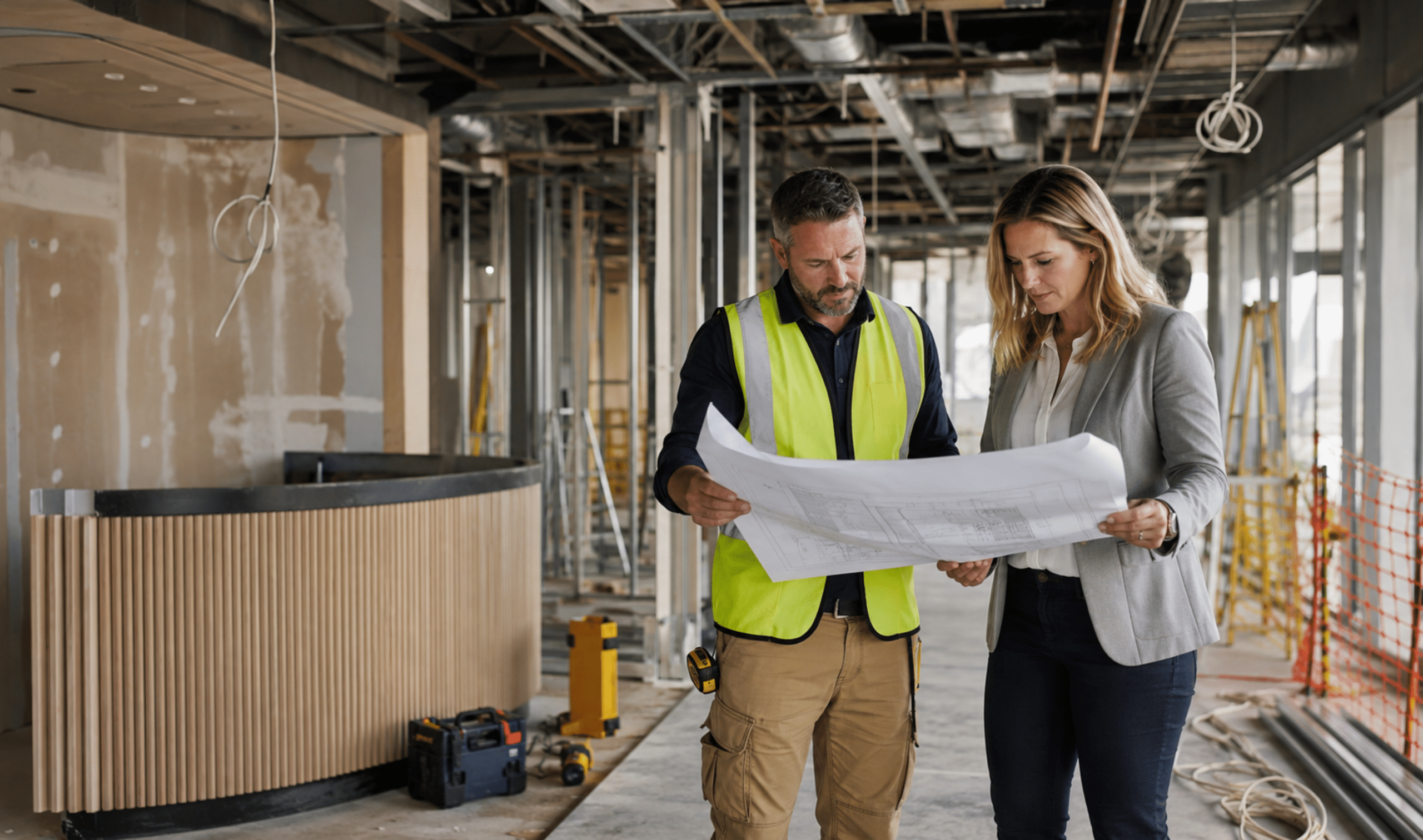

If you’re a commercial builder or contractor operating in Adelaide or across South Australia, insurance is no longer just a compliance exercise. On larger commercial projects, insurance plays a critical role in risk management, contract compliance, cash flow protection, and business continuity.
Builders insurance for commercial work is very different to residential or small-scale trade cover. Contract values are higher, multiple parties are involved, and insurance requirements are often dictated by head contracts, developers, or government bodies. Getting it wrong can delay project commencement, expose your business to uninsured losses, or leave you personally exposed if a claim arises.
This guide is written specifically for commercial builders and contractors operating on higher-value projects in South Australia, often with annual turnover around $8m+, or those regularly tendering for commercial or government work.
Who This Guide Is For
This guide is relevant if you:
- Are a commercial builder or contractor operating in SA
- Work on projects with detailed contracts and insurance clauses
- Tender for government, council, or developer-led projects
- Subcontract to head contractors on larger commercial sites
- Carry responsibility for coordinating works, not just supplying labour
If you mainly undertake small residential builds or ad-hoc trade work, many of the insurance considerations below won’t apply. Commercial builders face a very different risk profile — and that’s what this guide focuses on.
What “Builders Insurance” Actually Means on Commercial Projects
One of the most common misunderstandings we see is the belief that “builders insurance” is a single policy. On commercial projects, it isn’t.
Builders insurance is usually a combination of multiple policies, each responding to different risks across the life of a project. These policies must be structured to work together. Gaps between them are where claims most often fail.
On commercial builds, insurance is also heavily influenced by contractual responsibility. Who holds the contract, who controls the site, and who carries design or coordination responsibility all affect how insurance should be arranged.
Insurance as a Competitive Advantage
For commercial builders and contractors, insurance isn’t just about risk management — it can directly impact your ability to win work and retain clients. Many tenders, head contracts, and developer agreements require specific insurance structures, limits, and wording.
Having the right broker and policy in place can:
- Help you meet tender and contract insurance requirements quickly
- Avoid delays caused by non-compliant Certificates of Currency
- Give developers and head contractors confidence in your risk management
- Put you in a stronger position when competing against builders who don’t carry the full cover being requested
Working with a broker who understands commercial construction and local SA requirements helps ensure insurance supports your ability to secure and maintain work — not slow it down.
Core Insurance Covers for Commercial Builders in Adelaide
Contract Works Insurance
Contract Works insurance covers physical loss or damage to the works under construction. This includes materials, fixtures, temporary works, and in many cases, existing structures being worked on.
For commercial builders, Contract Works insurance must be structured correctly to reflect:
- The full contract value, including variations
- Multi-stage or progressive builds
- Fit-outs, refurbishments, and upgrades
- Works within or attached to existing buildings
- Multiple principals or stakeholders
A common issue we see in SA is builders carrying Contract Works limits that no longer align with their contractual obligations. If damage occurs and the policy limit is insufficient, the builder is still legally bound to meet those contractual obligations in full — often leaving the business, and sometimes the director personally, to fund the shortfall.
Public & Products Liability Insurance
Public Liability insurance protects your business if third-party property damage or personal injury occurs as a result of your activities.
On commercial sites, liability exposure is significantly higher due to:
- Multiple contractors working at the same time
- Shared access areas and services
- Projects involving offices, retail, or mixed-use buildings where the public is present
- Larger and more complex claims when incidents occur
On most commercial contracts, insurance is there to support the builder — not replace their obligations. If something goes wrong and the policy doesn’t respond the way the contract expects, the builder is still responsible for fixing the issue and keeping the project moving. This is where the difference between a standard Liability policy and a construction-specific policy really matters. Some wordings offer broader protection that better aligns with commercial contracts, while others leave gaps that only become obvious when a claim arises.
Professional Indemnity (Design & Construct)
Professional Indemnity insurance is no longer limited to architects or engineers. Commercial builders are increasingly exposed to design-related claims, even where they consider themselves “construction only”.
Design exposure can arise from:
- Design & Construct contracts
- Failure to warn of design or documentation issues
- Coordination errors between trades
- Incorrect specifications or substitutions
- Reliance on consultants, engineers, or subcontracted professionals
On large commercial sites, Professional Indemnity claims often involve multiple parties, not just the one who caused the issue. Even where design or advice is subcontracted, builders and contractors can still be drawn into the claim, required to fund defence costs, and contribute to any settlement. If Professional Indemnity cover isn’t structured for this type of exposure, it can fall short when it’s needed most.
Management Liability
Commercial building businesses face risks that extend beyond what happens on site. One of the biggest concerns for builders is statutory liability, including investigations and enforcement action by regulators.
Management Liability insurance is designed to protect the business and its directors against issues such as:
- Regulatory investigations and compliance matters
- Breaches of directors’ duties
- Employment-related claims
- Insolvency-related actions
Not all Management Liability policies provide the same cover or limits. For builders operating at scale, having the right wording and limits in place is critical as regulatory scrutiny across the construction sector continues to increase.
Plant, Equipment & Tools
Commercial builders often own or hire high-value plant and equipment. Insurance must clearly address:
- Owned versus hired-in plant
- Responsibility under hire agreements
- On-site, in-transit, and off-site storage exposure
- Damage caused by or to third parties
Assumptions around who is responsible for insuring plant are a common cause of disputes and uninsured losses on commercial sites.
Insurance Requirements for Tenders & Government Projects in South Australia
Government and large commercial tenders often include strict insurance requirements that go well beyond standard policy wording. These may include:
- Minimum Public Liability limits (often $20m or more)
- Specific endorsements or policy extensions
- Principal indemnity or named insured clauses
- Contract Works requirements that differ from standard policies
- Ongoing compliance throughout the project, not just at commencement
A common mistake is assuming that providing a Certificate of Currency is enough. In reality, policies often need to be reviewed against the actual contract wording to ensure they comply.
Failing to meet insurance requirements can lead to:
- Delays in contract execution
- Non-compliance notices during the project
- Exposure to uninsured contractual liabilities
Common Insurance Mistakes We See on Commercial Projects in SA
Across Adelaide and regional South Australia, the same issues appear repeatedly on commercial builds:
- Contract Works limits not updated as project values increase
- Excesses set at levels that are commercially unmanageable
- Design exposure not addressed under Professional Indemnity
- Assumptions that head contractor insurance provides protection
- Policies renewed without reviewing contractual obligations
These issues often only come to light after a claim, when options to fix them are limited.
How Contract Value and Sums Insured Really Work
Contract values on commercial projects have increased significantly in recent years. Labour shortages, supply chain disruptions, and material escalation all contribute to higher overall build costs.
If insurance limits are not reviewed properly:
- Contract Works policies may not reflect full reinstatement costs
- Variations may be inadequately covered
- Partial losses may result in underinsurance penalties
Simply renewing last year’s policy without adjustment is one of the most common ways builders become unintentionally underinsured.
Why South Australia Is Different
Commercial construction insurance is not one-size-fits-all. South Australia has its own regulatory environment, insurer appetite, and claims trends.
Factors that often influence insurance outcomes in SA include:
- Adelaide CBD versus metro or regional projects
- Commercial fit-outs versus ground-up construction
- Local council and government requirements
- Insurer appetite for specific construction types
Local experience matters when structuring insurance that will respond when it’s needed.
Who Is Responsible for Insurance on Commercial Sites?
Responsibility for insurance on commercial projects is often misunderstood.
Responsibility can vary depending on:
- Whether you are the head contractor or subcontractor
- The wording of the building contract and any subcontract agreements
- Who controls the site
- How risk is allocated under contract
Assuming another party’s insurance applies, is one of the most common causes of uninsured exposure on commercial projects.
How We Work With Commercial Builders
We work with commercial builders and contractors operating on larger projects across Adelaide and South Australia.
Our role typically includes:
- Reviewing insurance clauses before contracts are signed
- Structuring insurance to match how you actually operate
- Advising on excess exposure and risk transfer
- Supporting claims and insurer negotiations
- Acting as an adviser, not just a policy arranger
Insurance is most effective when it’s considered before a project starts — not after something has gone wrong.
Final Thoughts
Builders insurance for commercial projects in Adelaide is complex, and the risks involved are significant. Insurance needs to align with contract wording, project scope, and how responsibility is allocated across the build.
If you’re tendering for commercial or government work, reviewing a new contract, or approaching renewal, early advice can help prevent issues later.
Be Covered specialises in commercial construction insurance and works closely with builders and contractors across South Australia to navigate contract requirements, insurer wordings, and risk exposure on complex projects.
If you’d like your insurance or upcoming contracts reviewed before work starts, get in touch with Be Covered.