
Written by Candice Klau, Managing Director, Be Covered Insurance Brokers
Candice has more than 20 years of insurance broking experience and specialises in construction insurance for commercial builders across Australia.
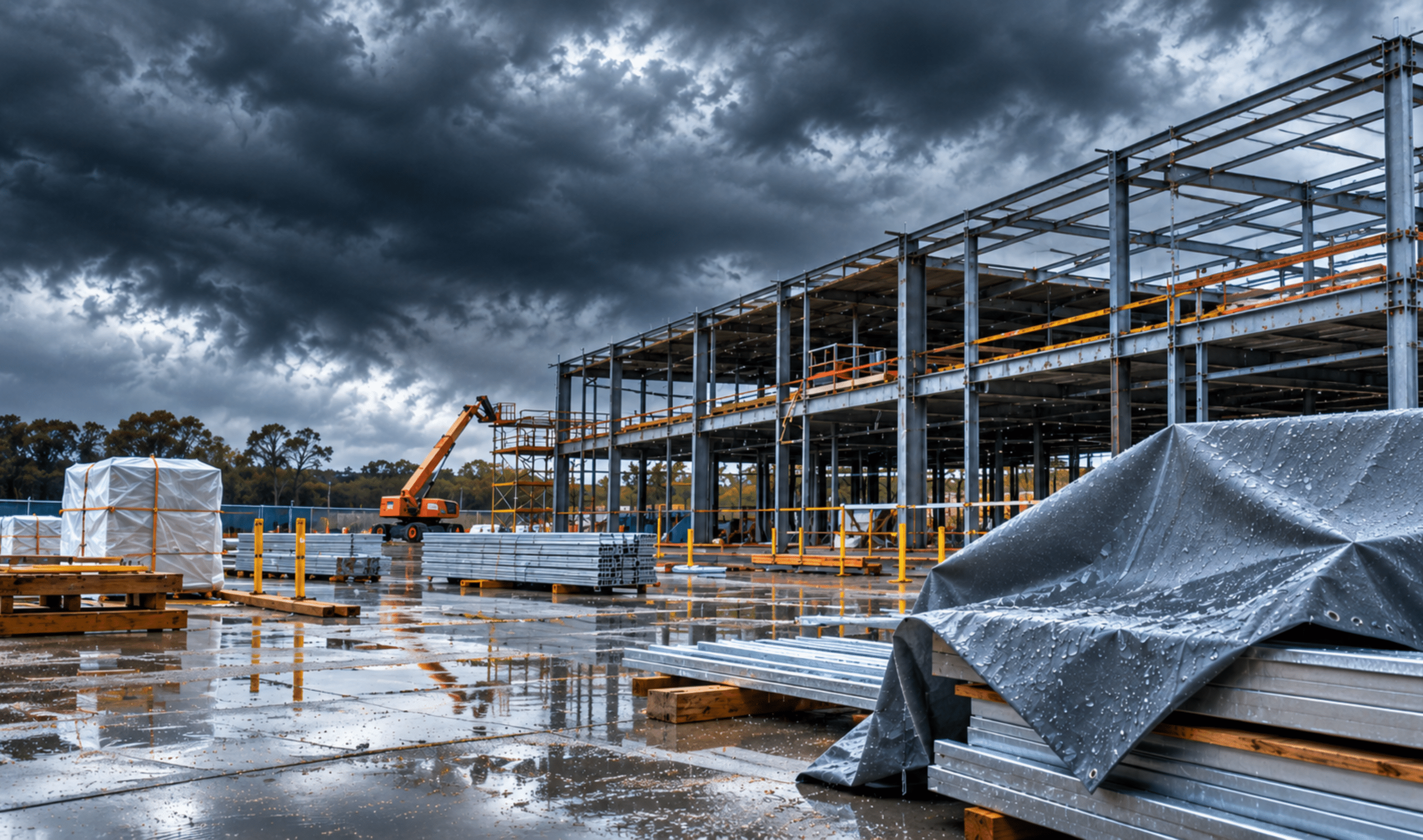
A severe storm can cause significant damage to a commercial construction project in a matter of hours. Partially completed structures, roofing systems, building materials and temporary works may all be exposed.
For commercial builders managing substantial projects, the financial consequences can extend beyond repairs, potentially affecting project timelines, contractual obligations and profitability.
But when storm damage occurs on a commercial construction site, who pays, and which insurance policy responds?
In Australia, Contract Works Insurance may cover certain storm-related physical damage to insured construction works. However, the outcome depends on the construction contract, policy wording, exclusions and circumstances of the loss.
Having Contract Works Insurance doesn’t automatically mean every storm-related cost will be covered.
Does Contract Works Insurance cover storm damage?
Contract Works Insurance is generally designed to protect the insured construction works against specified physical loss or damage during the construction period.
Depending on the policy, storm-related cover may include:
- Partially completed structures: Damage to structural elements, roofing and other insured building works.
- Building materials: Materials stored on-site or awaiting installation, subject to storage conditions and limits.
- Temporary works: Certain formwork, scaffolding, hoardings and temporary structures where included in the policy.
- Water damage: Physical damage arising from insured storm events, subject to applicable exclusions and conditions.
However, commercial builders should not assume all storm, flood or water damage is treated the same way.
The cause of the damage, the property affected and the policy’s definitions can significantly influence whether a claim is covered.
Who is responsible for storm damage on a commercial construction project?
On commercial projects, responsibility for arranging insurance may sit with the principal, developer or head contractor, depending on the construction contract.
Some projects operate under principal-controlled insurance arrangements, while others require the commercial builder to arrange Contract Works Insurance for the project.
But the party responsible for arranging insurance is not necessarily the party ultimately responsible for every uninsured cost.
Commercial builders should understand:
- Who is required to arrange and maintain the insurance.
- Which parties are insured under the project policy.
- Whether the insured values reflect the project and approved variations.
- How storm-related excesses and uninsured losses are allocated.
- What the contract requires if damage delays construction.
A commercial builder can meet the requirement to hold insurance and still face financial exposure if the policy doesn’t match the contract.
Related reading: Who’s Responsible for Insurance on a Commercial Construction Site?
What happens when a storm damages a partially completed commercial building?
Consider a hypothetical commercial warehouse project.
The head contractor is nearing completion of the building’s roofing and external cladding when a severe storm strikes. High winds damage partially installed roofing, while heavy rain enters the building and damages electrical installations and materials stored inside.
The builder now faces substantial repair costs and potential disruption to the construction schedule. Contract Works Insurance may respond to the insured physical damage, depending on the policy and circumstances.
However, questions may arise about:
- Whether the roofing and damaged materials are insured.
- Whether water ingress is covered under the relevant policy conditions.
- Whether temporary weather protection and site precautions were adequate.
- Which excess applies to the event.
- Whether additional costs arising from project delays are insured.
An important distinction: Insurance for physical damage does not automatically cover delay penalties, lost revenue or other financial consequences of a delayed project.
The construction contract may also determine which party must manage repairs and bear costs that fall outside the insurance arrangements.
This example is illustrative only. An actual claim must be assessed against the relevant policy and construction contract.
Four insurance checks commercial builders should make before storm season
- Check the insured project value. Ensure the Contract Works Insurance reflects the project value, relevant variations and insured materials. Don’t assume an existing limit remains adequate as construction progresses.
- Review storm, flood and water damage conditions. Understand the differences between insured events and check relevant exclusions, excesses, weatherproofing requirements and site protection conditions.
- Confirm what property is insured. Check the treatment of partially completed works, temporary structures, stored materials and existing buildings where refurbishment or extension work is involved.
- Understand the contract’s financial obligations. Review who is responsible for repairs, uninsured losses, excesses and potential delay-related costs following storm damage.
These checks should be considered alongside the wider insurance obligations of the project, particularly where several contractors or stakeholders are involved. For more guidance on reviewing your policy before starting a project, read our Contract Works Insurance Checklist for Builders.
Why specialist construction insurance advice matters
For established commercial builders, storm damage is not simply a question of whether a policy includes weather-related events.
It’s about whether the insurance arrangements reflect the project’s actual risks, construction stages and contractual obligations.
A policy suitable for one commercial project may not provide the same protection on another, especially where project values, existing structures or construction methods differ.
At Be Covered Insurance Brokers, we specialise in helping commercial builders review their construction insurance arrangements, understand policy conditions and identify potential gaps before they become costly problems.
Before severe weather puts your next commercial project at risk, understand what your insurance is designed to cover.
Contact Be Covered Insurance Brokers to discuss your commercial construction insurance requirements.
General information only. Insurance cover depends on the applicable policy terms, conditions, exclusions and claim circumstances. Obtain appropriate insurance and legal advice for your specific project.